
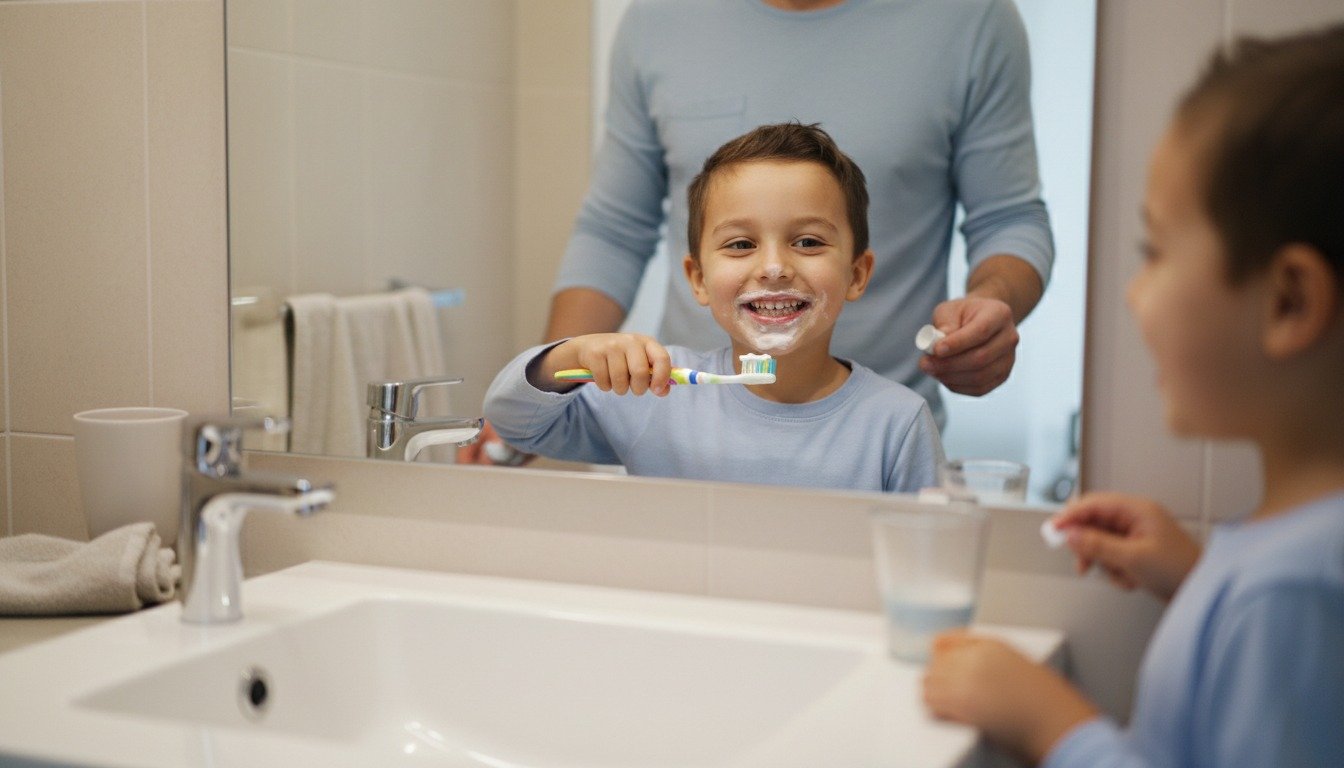
If brushing time in your household involves more negotiation than a corporate merger, you're not alone. Getting children to brush their teeth thoroughly and consistently ranks among the most common challenges parents face. The good news? With the right approach, tooth brushing can become a natural part of your child's routine rather than a daily battle.
After years of working with families across North Carolina, our team at Pediatric Dentistry by Dr. Jeffries has gathered proven strategies that actually work. Here are our top five tips for making brushing time smoother and more effective.
1. Make It a Routine, Not a Request
Children thrive on predictability. When tooth brushing happens at the same time every day, in the same sequence of events, it stops feeling like an imposition and starts feeling like simply what happens next.
Build brushing into the natural flow of your morning and evening routines. Perhaps it comes right after bath time, or immediately after putting on pajamas. The specific timing matters less than the consistency. When brushing is as automatic as getting dressed, there's less room for resistance.
For younger children, a visual routine chart can be helpful. Seeing brushing as one step in a series of pictures gives them a sense of control and predictability.
2. Let Them Choose Their Tools
A small sense of ownership goes a long way with children. Take your child to the store and let them pick out their own toothbrush. Whether they choose one featuring their favorite character or simply a color they love, that brush becomes theirs in a meaningful way.
The same principle applies to toothpaste. Child-friendly flavors like bubblegum or strawberry are formulated specifically for young palates that might find mint overwhelming. When children enjoy the taste of their toothpaste, they're far more likely to brush willingly.
One practical note: make sure the toothbrush has soft bristles and a head sized appropriately for your child's mouth. Our team can recommend specific options during your next visit.
3. Use a Timer
Two minutes is the recommended brushing time, but to a child, two minutes can feel like an eternity. Making those minutes concrete helps enormously.
There are several approaches that work well:
- Sand timers: Visual and tactile, these give children something to watch while they brush.
- Electric toothbrushes with built-in timers: Many children's electric brushes pulse or play music at 30-second intervals, signaling when to move to a different part of the mouth.
- Songs: Play a favorite two-minute song during brushing time. When the song ends, brushing is done.
- Brushing apps: Several free apps feature timers with games or characters that make the two minutes engaging.
The key is transforming an abstract duration into something visible or audible that children can follow.
4. Brush Together
Children learn by watching, and there's no better teacher than a parent who brushes alongside them. When you brush your teeth at the same time as your child, you accomplish several things at once.
First, you model proper technique. Children naturally mimic what they see, so demonstrating how you brush your back teeth or your tongue teaches more effectively than verbal instructions alone.
Second, you normalize the behavior. Tooth brushing isn't something adults make children do; it's something everyone in the family does because it matters.
Third, you create connection. Those two minutes become shared time rather than a chore you're supervising. Many families find that brushing together opens up brief but meaningful moments of conversation.
5. Supervise Until They're Ready
Here's something that surprises many parents: most children don't have the manual dexterity to brush their teeth effectively on their own until around age six to eight. Some children develop this skill earlier, others later, but the general guideline is that if your child can't yet tie their shoes independently, they probably still need help with brushing.
This doesn't mean doing it for them entirely. A good approach is to let your child brush first, giving them practice and autonomy, and then follow up with a quick "check-up brush" where you ensure all surfaces have been cleaned properly.
As your child's coordination improves, gradually reduce your involvement. The transition to independent brushing should be gradual rather than abrupt.
A Note on Technique
While making brushing enjoyable is important, technique matters too. Teach your child to:
- Hold the brush at a 45-degree angle to the gums
- Use short, gentle strokes rather than aggressive scrubbing
- Brush all surfaces: outer, inner, and chewing surfaces of every tooth
- Don't forget the tongue, where bacteria also accumulate
- Spit out the toothpaste but avoid rinsing immediately, which washes away protective fluoride
When Brushing Remains a Struggle
Some children have sensory sensitivities that make tooth brushing genuinely uncomfortable. If your child consistently resists despite your best efforts, mention it at your next dental visit. We can assess whether there might be an underlying issue and suggest targeted solutions.
Remember that the goal is building a lifelong habit. A few difficult weeks or months now will give way to years of healthy teeth and gums. Stay patient, stay consistent, and celebrate the small victories along the way.
At Pediatric Dentistry by Dr. Jeffries, we're always happy to demonstrate proper brushing technique with your child during their appointments. We're partners with you in building healthy habits that will serve your child well throughout their life.