
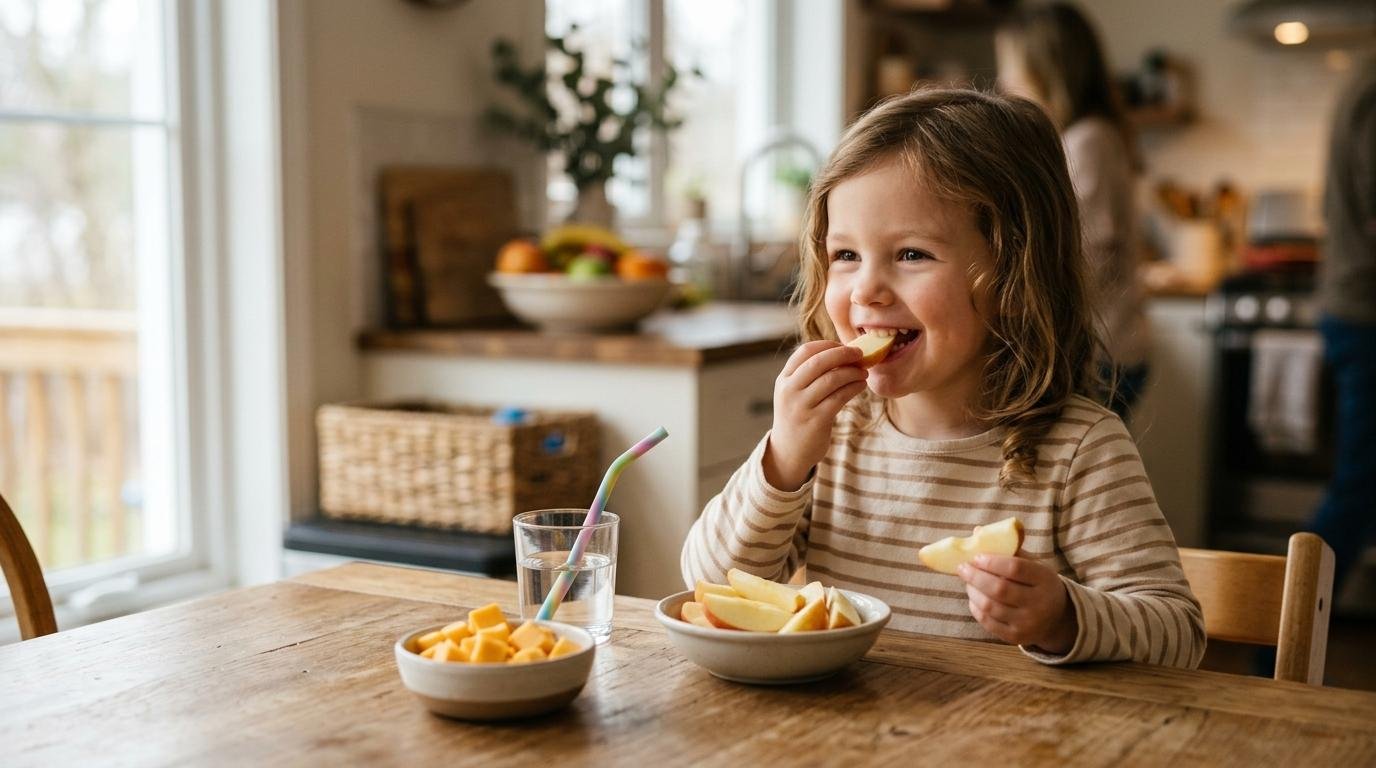
Kids snack. A lot. Between school, practice, playdates, and the long stretch before dinner, most children eat something every couple of hours. That is normal and healthy for growing bodies. What many parents do not realize is that the snacks themselves play a bigger part in cavities than almost anything else, sometimes more than the candy saved for special occasions.
The good news is that protecting your child's teeth does not mean banning treats or policing every bite. Once you know which snacks are hard on teeth and which ones actually help, a few easy swaps do most of the work. Here is what our team at Pediatric Dentistry by Dr. Jeffries tells families across North Carolina.
It Is Not Just Sugar. It Is How Often and How Long.
Every time your child eats something with sugar or starch, the bacteria in their mouth feed on it and produce acid. That acid softens tooth enamel for about twenty to thirty minutes after each snack. Saliva slowly repairs the damage, but it needs time to catch up.
This is why grazing all afternoon is harder on teeth than eating the same food in one sitting. A child who nibbles crackers and sips juice over two hours keeps the mouth under a near-constant acid attack, with no chance to recover. The same snack finished in ten minutes does far less harm. So two things matter most: what your child eats, and how often and how slowly they eat it.
It helps to picture it from the tooth's side. After a snack, saliva needs roughly half an hour to neutralize the acid and start repairing the enamel. A child who eats three separate snacks in an afternoon gives the teeth three of those windows to recover. A child who grazes steadily from lunch until dinner never really lets that repair happen at all. It is also why two cookies eaten at once are gentler on teeth than one cookie nibbled over an hour, and why even wholesome foods count toward how often the mouth is working. Frequency, not sugar alone, is the number to keep an eye on.
The Worst Snacks for Kids' Teeth
These are not foods to forbid forever. They are the ones to serve less often, finish quickly, and follow with water or brushing.
- Sticky and gummy candy. Fruit chews, gummy bears, and taffy cling to the grooves of the back teeth and stay there long after the snack is over, feeding bacteria for hours.
- Gummy vitamins and fruit snacks. Many parents think of these as healthy, but they stick to teeth just like candy and often carry just as much sugar.
- Hard candy and lollipops. The problem here is time. A candy that sits in the mouth for fifteen minutes bathes the teeth in sugar the entire time.
- Chips, crackers, and other refined starches. These break down into sugar and pack into the chewing surfaces, where they linger.
- Juice, soda, and sports drinks. Sipped slowly, these coat the teeth in sugar and acid again and again. Even 100 percent juice is concentrated sugar to a small mouth.
- Dried fruit. Raisins and fruit leather seem wholesome, and they do have nutrients, but they are sticky and sugar-dense, so they behave a lot like candy on teeth.
Watch Out for the Sneaky "Healthy" Snacks
Some of the hardest snacks on teeth are the ones marketed as the good choice. They are easy to reach for without a second thought, so it helps to know the usual ones.
- Granola and cereal bars. Most are held together with syrup or honey, which makes them stick to teeth a lot like candy.
- Flavored yogurt and yogurt tubes. A single cup can carry as much sugar as a dessert. Plain yogurt with fresh fruit added at home is a much better pick.
- Juice pouches and "fruit" drinks. Even the ones labeled natural are mostly concentrated sugar with very little of the whole fruit.
- Veggie straws and flavored crackers. They feel light, but they are refined starch that breaks down into sugar and packs into the grooves of the teeth.
None of these are off-limits. The point is simply to treat them as occasional snacks rather than everyday ones, and to follow them with water when you can. Reading the label for added sugar takes a few seconds and tells you most of what you need to know.
The Best Snacks for Kids' Teeth
These snacks either help clean teeth, encourage saliva, or simply give bacteria nothing to feed on. They make easy, everyday choices.
- Cheese. A favorite of dentists for good reason. Cheese is low in sugar, high in calcium, and helps balance the acid in the mouth after eating.
- Plain yogurt. Calcium and protein with no added sugar. Add fresh fruit at home instead of buying the sweetened cups.
- Crunchy fruits and vegetables. Apples, carrots, celery, and cucumbers take real chewing, which boosts saliva and gently scrubs the teeth.
- Cheese and a few whole-grain crackers. Pairing the cheese with the starch softens the impact of the cracker.
- Nuts and seeds. For children old enough to eat them safely, these are filling, low in sugar, and tooth-friendly.
- Water. The simplest snack helper there is. It rinses away food, carries no sugar, and most tap water in our area contains fluoride that strengthens enamel.
Do Not Forget About Drinks
What your child drinks between meals matters as much as what they eat. A sippy cup or water bottle carried around all afternoon is really all-day snacking, one sip at a time, and if it is filled with anything sweet the teeth never get a break.
- Water is the best choice between meals, every time. It rinses the mouth, adds no sugar, and the fluoride in most local tap water actively helps the teeth.
- Milk is a good choice with meals and snacks for the calcium and protein. It does have natural sugar, though, so it is not the best thing to sip slowly for hours.
- Juice, soda, and sports drinks are the ones to keep occasional. If your child does have juice, serving it with a meal in a regular cup, rather than a sip-all-day bottle, makes a real difference.
A simple habit that pays off: water in the everyday bottle, and save the other drinks for the table.
Smart Snacking Habits That Protect Teeth
The way your child snacks matters as much as the snack itself. A few small routines make a real difference:
- Set snack times instead of all-day grazing. Two or three planned snacks give the mouth time to recover between them.
- Serve sweets with meals, not on their own. The extra saliva at mealtime helps wash sugar away faster.
- Offer water after a snack. A quick drink or swish clears away a lot of what is left behind when brushing is not an option.
- Finish the snack, then move on. A treat eaten and done is far kinder to teeth than one nursed over an hour.
None of this has to be strict. When the everyday choices are mostly tooth-friendly, the occasional birthday cupcake or ballpark snow cone is no problem at all.
Make the Better Choice the Easy Choice
Children reach for whatever is easy to grab, and you can use that to your advantage. The goal is not to police every bite, it is to set up the kitchen so the easy snack is also a good one.
- Keep tooth-friendly snacks ready and visible. A bowl of cut apples, cheese sticks, and baby carrots at kid height beats a bag of crackers in the pantry.
- Let your child choose from good options. Picking between cheese and yogurt feels like freedom to a child, and either answer is a win for you.
- Pack snacks for outings. A few minutes of prep means you are not stuck buying whatever the gas station has at mile forty of a road trip.
- Snack the same way yourself. When the whole family reaches for fruit and water, healthy choices stop feeling like a rule and start feeling normal.
Small changes to what is within reach add up to far more over a year than any single rule about sweets.
When to Talk to Your Dentist
If your child snacks often and you are seeing white spots near the gumline or any sign of a cavity, it is worth a visit. Frequent sugar is one of the most common reasons we see cavities in young teeth, and catching it early keeps small problems small. You can read more about why this matters in our guide on cavities in baby teeth.
A regular checkup is also the best time to ask about dental sealants, a quick preventive treatment that shields the chewing surfaces where snack debris likes to hide.
Healthy snacking is one of the easiest, most powerful habits you can build for your child's smile. Swap a few of the worst offenders for the better choices, keep snacks to set times, and finish with water, and you will be doing more for those little teeth than almost anything else between visits.
If it has been more than six months since your child's last checkup, we would love to see you. Our team is here to help your family build habits that keep those smiles healthy for life.